


(CI Images/Shutterstock)
Over the previous twenty years, scientists have sequenced nearly every little thing they’ll entry—bacterial genomes from soil, viral samples from hospitals, intestine microbiomes from individuals around the globe, even the RNA inside single human cells. All of that sequencing output will get funneled into huge archives which have quietly turn into a number of the largest information collections on the planet.
When it comes to quantity, these repositories now comprise extra uncooked genetic information than Google has webpages. It needs to be a goldmine for scientific discovery, and possibly it’s. Nonetheless, most of it’s virtually unreachable as a result of the info is fragmented and almost unattainable to go looking in its uncooked kind.
That’s why a brand new device known as MetaGraph, lately revealed in Nature, is getting plenty of consideration. As a substitute of treating genomic information like one thing that must be cleaned and arranged first, it takes the alternative method by embracing the chaos.
MetaGraph was developed by a group of computational biologists and informatics researchers led by Gunnar Rätsch and André Kahles, together with a number of collaborators who specialise in large-scale sequence indexing and graph algorithms.
Their aim was to not construct one other reference genome or annotation database, however to make uncooked sequencing information itself searchable at petabase scale. In sensible phrases, they needed a system that works instantly on the unassembled reads saved in world archives and nonetheless returns correct organic solutions—with out reshaping the info to suit current instruments.
(Credit:Nature.com)
“It’s an enormous achievement,” says Rayan Chikhi, a biocomputing researcher on the Pasteur Institute in Paris. “They set a brand new customary” for analyzing uncooked organic information — together with DNA, RNA and protein sequences — from databases that may comprise hundreds of thousands of billions of DNA letters, amounting to ‘petabases’ of knowledge, extra entries than all of the webpages in Google’s huge index.
MetaGraph is described as “Google for DNA”, however Chikhi argues it’s really nearer to YouTube’s search engine, the place it doesn’t simply match key phrases, it analyzes the content material itself. It searches instantly by uncooked DNA and RNA reads and might detect patterns or variants that have been by no means annotated and even recognized to exist, making it potential to uncover indicators conventional instruments would utterly miss.
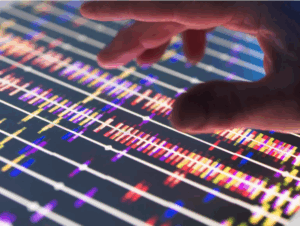
To do that, MetaGraph arranges uncooked sequencing reads right into a graph that represents how small fragments of DNA or RNA overlap throughout many datasets. It doesn’t attempt to assemble full genomes. As a substitute, it captures the relationships between hundreds of thousands of quick items, which permits the system to trace the place a specific sequence seems—even when it’s solely a tiny fragment shared between distant species or environments.
The graph itself is saved in a compressed format, however stays instantly searchable. When a researcher runs a question, MetaGraph doesn’t reprocess complete datasets. It navigates by the graph construction to find areas the place comparable patterns have already been noticed. This method makes it potential to go looking very giant collections of uncooked information in an affordable period of time, whereas nonetheless working on the degree of the unique reads quite than counting on annotations or pre-built references.
The researchers put MetaGraph to a real-world take a look at with antibiotic resistance. They took 241,384 human intestine microbiome samples collected from totally different elements of the world and requested a easy query: the place in these samples are resistance genes hiding? Usually, answering that may imply assembling every dataset, constructing references, and operating separate pipelines throughout 1000’s of recordsdata.
That form of guide work might take weeks or months. MetaGraph did it in about an hour on a high-performance machine. Because the device is constructed to go looking the uncooked reads instantly, it was capable of spot resistance genes even after they appeared solely as tiny fragments or in species with no reference genome in any respect. The system additionally uncovered geographic patterns that lined up with recognized variations in antibiotic use.
(PopTika/Shutterstock)
MetaGraph isn’t the one try to make huge sequencing archives searchable. Chikhi himself, along with Artem Babaian, has developed a separate platform known as Logan that tackles the issue from a distinct angle. As a substitute of indexing uncooked reads, Logan stitches them into longer stretches of DNA, which permits it to shortly establish full genes and their variants throughout huge datasets.
That method led to the invention of greater than 200 million pure variations of a plastic-degrading enzyme. Nonetheless, assembly-based instruments like Logan are optimized for particular targets, and so they can miss indicators that don’t kind clear, full sequences. MetaGraph is constructed to go looking uncooked information instantly, providing higher scope and probably extra flexibility to researchers.
If instruments like MetaGraph turn into extensively accessible, researchers wherever might mine world datasets with out huge infrastructure or customized pipelines. That might speed up drug discovery, environmental monitoring and personalised medication.
Maybe crucial shift is that future scientific breakthroughs might not require new experiments in any respect. They might come from information that has been sitting in archives for years, information we already collected however are solely now capable of actually search and perceive.
Associated Gadgets
State of DNA Storage Mentioned in New Whitepaper
Inside Microsoft Cloth’s Push to Rethink How AI Sees Knowledge
Tremendous-Tuning LLM Efficiency: How Data Graphs Can Assist Keep away from Missteps
